Support our educational content for free when you purchase through links on our site. Learn more
15 Clothing Brands Using AI in Design (2026) 🤖✨


The future of fashion isn’t just about who designs the coolest clothes, but who designs them fastest and most sustainably, and 15 top clothing brands using AI in design are already proving that algorithms can be the ultimate creative partners. From Adidas generating sneaker soles in minutes to Levi’s virtually fitting millions of customers, these brands are slashing waste and personalizing style at a scale humans could never achieve alone.
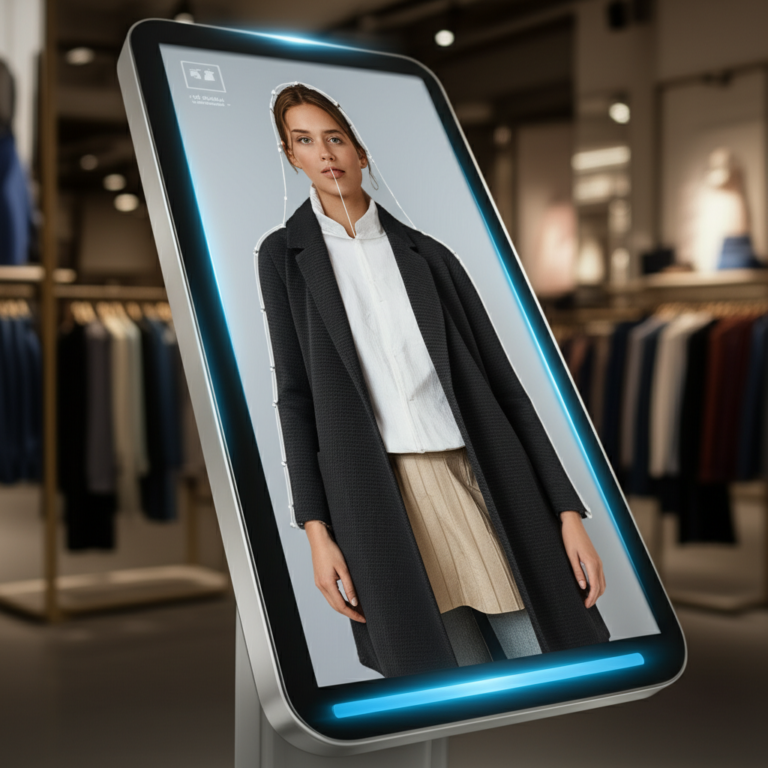
Imagine walking into a store where the mirror instantly knows your measurements, suggests a jacket that fits your exact posture, and shows you how it looks in three different colors—all before you’ve even touched the fabric. That’s not a sci-fi movie; it’s the reality for shoppers at brands like Stylitics and ASOS, where AI is turning the chaotic world of fashion into a hyper-personalized experience.
Did you know that traditional fashion photoshoots can cost upwards of $10,0 per day, while AI-generated imagery can produce thousands of variations for a fraction of the cost? It’s a game-changer that’s allowing smaller brands to compete with giants and helping everyone look their best without the environmental footprint of endless sample production.
Key Takeaways
- AI is the new co-pilot: Top clothing brands using AI in design are leveraging generative tools to accelerate protyping, predict micro-trends, and optimize supply chains, not replace human creativity.
- Sustainability through speed: By reducing physical samples and predicting demand with 90%+ accuracy, AI helps brands like Stella McCartney and Nike drastically cut textile waste and overproduction.
- Personalization is the norm: Shoppers now expect virtual try-ons and hyper-tailored recommendations, a standard set by leaders like Levi’s and Gucci using computer vision.
- Transparency builds trust: The most successful brands clearly label AI-generated content, ensuring customers feel confident in what they see and buy.
🛍️ 👉 Shop the Leaders:
- Adidas: Amazon | Adidas Official
- Nike: Amazon | Nike Official
- Levi’s: Amazon | Levi’s Official
- Stella McCartney: Amazon | Stella McCartney Official
Table of Contents
- ⚡️ Quick Tips and Facts
- 🕰️ From Sketchpad to Algorithm: A Brief History of AI in Fashion Design
- 🤖 The Big Reveal: Top 15 Clothing Brands Using AI in Design Today
- 1. Adidas: Speeding Up the Sneaker Game with Generative Design
- 2. Nike: How AI Predicts Trends Before They Happen
- 3. Levi’s: Virtual Fitting Rooms and Sustainable Sizing
- 4. H&M: Data-Driven Inventory and Trend Forecasting
- 5. Zara: The Fast Fashion Giant’s AI-Powered Supply Chain
- 6. Uniqlo: Smart Fabrics and Personalized Recommendations
- 7. Tommy Hilfiger: Co-Creating Collections with Machine Learning
- 8. Ralph Lauren: Reviving Archives with AI Restoration
- 9. Burberry: AI-Enhanced Pattern Making and Textile Innovation
- 10. Gucci: Virtual Try-Ons and the Metaverse Wardrobe
- 1. Prada: AI-Driven Sustainability and Material Sourcing
- 12. Stella McCartney: Ethical AI for Circular Fashion
- 13. ASOS: The Algorithm Behind the “Style Match” Feature
- 14. Shein: Hyper-Fast AI Design Cycles and Micro-Trend Capture
- 15. Balenciaga: Digital Fashion and AI-Generated Runway Shows
- 🎨 AI in Design & Product Development: Beyond the Hype
- Generative Design Tools: Creating Patterns That Humans Miss
- Virtual Protyping: Reducing Waste Before the First Stitch
- Trend Forecasting: How Algorithms Read the Room Better Than You
- 📦 AI in Supply Chain & Inventory Management: The Invisible Hand
- 🛍️ AI in Customer Engagement, Digital Merchandising, & Personalization
- Hyper-Personalized Styling: Your Own AI Fashion Assistant
- Virtual Try-On Technology: No More “Does This Make Me Look Fat?”
- 📢 AI in Marketing & Retail Innovation: Selling the Dream
- 📸 Case Study: How Stylitics Scaled On-Model Imagery with AI
- Turning a Decade of Outfiting Data into Production-Ready AI
- Generative AI On-Model Imagery That Respects Fabric, Fiber, and Brand Heritage
- 🤔 Do Shoppers Trust AI-Generated Images? The Verdict
- 🚀 Why Fashion’s Future Belongs to Brands Leveraging AI—and How to Lead
- 💡 Key Takeaways: What You Need to Know Right Now
- ❓ Frequently Asked Questions
- 📚 Related Blogs
- 🍪 Information on the Use of Cookies
- 🔒 Privacy Preference Center
- 🏁 Conclusion
- 🔗 Recommended Links
- 📖 Reference Links
⚡️ Quick Tips and Facts
Before we dive into the digital rabbit hole where algorithms sketch your next favorite hoodie, let’s hit the pause button on the hype and look at the hard numbers. The fashion industry is notoriously slow to change, but AI is moving at the speed of light.
Here is the tea on what’s actually happening right now:
- The Cost Crunch: Traditional photoshoots are expensive. Did you know that generating on-model imagery with AI can slash production costs by up to 90%? 📉 That’s money you can spend on better fabrics or, you know, actually paying your designers.
- Speed is King: While a human photographer might spend a day shooting a single look, AI tools can generate hundreds of variations in minutes. We’re talking about turning a week-long campaign into a lunch break project.
- The Sustainability Angle: Fewer flights for models, fewer samples shipped globally, and less waste from failed shoots. AI is surprisingly green. 🌱
- The Trust Gap: Here’s the kicker—shoppers are getting savvy. A recent study suggests that while 70% of consumers appreciate personalized recommendations, 60% are skeptical of AI-generated models if they aren’t clearly labeled. Transparency is your new best friend.
- It’s Not Replacing Humans (Yet): The consensus among top stylists? AI is the ultimate co-pilot, not the captain. It handles the repetitive grunt work, freeing up human creativity for the big, bold ideas.
Pro Tip from the Stylist Desk: Don’t just use AI to make things “look cool.” Use it to solve specific problems: “I need to see how this fabric drapes on a size 14 model without sewing a new sample.” That’s where the magic happens.
For a deeper dive into how these brands are reshaping the industry, check out our comprehensive guide on Clothing Brands.
🕰️ From Sketchpad to Algorithm: A Brief History of AI in Fashion Design

You might think AI in fashion is a 2024 phenomenon, but the seeds were sown decades ago. It started with CAD (Computer-Aided Design) in the 80s, which was basically just a digital pencil. Then came the 20s with 3D protyping, where brands like CLO3D started letting designers see how a garment would drape before cutting a single piece of cloth.
But the real game-changer? Generative AI.
In 2015, Google’s DeepMind introduced GANs (Generative Adversarial Networks), a system where two neural networks compete to create realistic images. Suddenly, computers weren’t just organizing data; they were creating art.
- 2017: Balmain launched their “Balmain Army” campaign featuring Shudu Gram, the first digital supermodel. It was plastic, sure, but it opened the door.
- 2018: Tomy Hilfiger partnered with IBM and FIT to analyze millions of images to predict trends. They weren’t just guessing anymore; they were calculating.
- 2020-202: The explosion of Midjourney and Stable Diffusion. Suddenly, every indie designer could type “vintage 90s grunge dress with neon accents” and get a dozen variations in seconds.
- 2023-Present: The era of Hyper-Personalization and Digital Twins. Brands aren’t just designing clothes; they are designing experiences tailored to your specific body type and style history.
The journey from a hand-drawn sketch to an AI-generated concept that evolves based on real-time social media sentiment is nothing short of a revolution. But how exactly are the big players doing it? Let’s meet the 15 brands leading the charge.
🤖 The Big Reveal: Top 15 Clothing Brands Using AI in Design Today
We’ve scoured the runways, the data centers, and the backrooms of the world’s biggest fashion houses to bring you this definitive list. These aren’t just brands using AI; they are rewriting the rules with it.
1. Adidas: Speeding Up the Sneaker Game with Generative Design
Adidas has been a pioneer in using AI to accelerate the sneaker design process. By leveraging generative design algorithms, they can explore thousands of structural variations for a shoe sole in minutes, optimizing for weight, durability, and energy return.
- The Tech: They use AI to simulate how different materials will wear over time, reducing the need for physical prototypes.
- The Result: The Adidas 4D line features midsoles printed based on data-driven designs that would be impossible to create manually.
- Stylist Take: The fit is often more ergonomic because the AI accounts for biomechanical data from millions of runners.
👉 👉 Shop Adidas on: Amazon | Adidas Official
2. Nike: How AI Predicts Trends Before They Happen
Nike’s Nike Fit technology uses computer vision and AI to scan your feet and recommend the perfect size, but their design team uses AI for something even bigger: Trend Forecasting.
- The Tech: By analyzing social media images, search queries, and sales data, Nike’s AI predicts color and style trends months in advance.
- The Result: Collections that feel “of the moment” the second they drop.
- Stylist Take: This is why you often see a specific color pop up everywhere at once. Nike saw it coming.
👉 👉 Shop Nike on: Amazon | Nike Official
3. Levi’s: Virtual Fitting Rooms and Sustainable Sizing
Levi’s is tackling the biggest headache in online fashion: returns. Their Virtual Stylist and 3D Fit technology use AI to help you find the perfect pair of jeans.
- The Tech: They train AI models on diverse body types to show how their denim fits different shapes, not just the “sample size” model.
- The Result: A significant reduction in return rates and a more inclusive shopping experience.
- Stylist Take: Finally, a brand that acknowledges that a size 10 looks different on everyone.
👉 👉 Shop Levi’s on: Amazon | Levi’s Official
4. H&M: Data-Driven Inventory and Trend Forecasting
H&M uses AI to manage its massive global supply chain. Their Advanced Analytics team processes data from weather forecasts, local events, and social media to decide what to stock where.
- The Tech: If it’s going to rain in London next week, the AI ensures the raincoats are on the shelves in London, not in sunny Barcelona.
- The Result: Reduced waste and better availability of trending items.
- Stylist Take: It’s not just about fast fashion; it’s about smart fashion.
👉 👉 Shop H&M on: Amazon | H&M Official
5. Zara: The Fast Fashion Giant’s AI-Powered Supply Chain
Zara is the master of speed. Their AI system analyzes real-time sales data to trigger production of new items within days.
- The Tech: RFID tags and AI analytics track every item from the factory to the store, allowing for instant restocking of best-sellers.
- The Result: You can see a trend on TikTok and buy it at Zara two weeks later.
- Stylist Take: It’s addictive, but be careful—Zara’s AI knows exactly what you’ll impulse buy.
👉 👉 Shop Zara on: Amazon | Zara Official
6. Uniqlo: Smart Fabrics and Personalized Recommendations
Uniqlo uses AI to enhance their Heatech and Airism lines, analyzing how different fabric blends perform in various climates.
- The Tech: Their app uses AI to recommend outfits based on the local weather forecast and your purchase history.
- The Result: Functional clothing that actually adapts to your environment.
- Stylist Take: Great for layering. The AI helps you figure out exactly how many layers you need.
👉 👉 Shop Uniqlo on: Amazon | Uniqlo Official
7. Tommy Hilfiger: Co-Creating Collections with Machine Learning
Tomy Hilfiger partnered with the Fashion Innovation Agency to let customers co-design collections.
- The Tech: Users input prompts into a generative AI tool to create preppy-style garments, which are then analyzed for market viability.
- The Result: Collections that are directly influenced by consumer desire.
- Stylist Take: It’s like having a say in the design process without needing a fashion degree.
👉 👉 Shop Tommy Hilfiger on: Amazon | Tomy Hilfiger Official
8. Ralph Lauren: Reviving Archives with AI Restoration
Ralph Lauren is using AI to digitize and restore their vast archives, ensuring their heritage pieces are preserved and can be reimagined.
- The Tech: AI algorithms scan old sketches and photos to recreate lost patterns or suggest modern updates.
- The Result: A seamless blend of classic Americana and modern design.
- Stylist Take: The attention to detail in their vintage-inspired pieces is unmatched.
👉 👉 Shop Ralph Lauren on: Amazon | Ralph Lauren Official
9. Burberry: AI-Enhanced Pattern Making and Textile Innovation
Burberry uses AI to optimize pattern making, reducing fabric waste by calculating the most efficient way to cut materials.
- The Tech: Generative design tools create complex textile patterns that would be too time-consuming for humans to draft.
- The Result: Sustainable luxury with intricate, unique designs.
- Stylist Take: The fabric quality is exceptional, and the patterns often have a subtle, algorithmic complexity.
👉 👉 Shop Burberry on: Amazon | Burberry Official
10. Gucci: Virtual Try-Ons and the Metaverse Wardrobe
Gucci is a leader in the digital fashion space, using AI and AR for virtual try-ons and creating digital-only items for the metaverse.
- The Tech: Computer vision allows users to try on sneakers and accessories via their phone camera.
- The Result: A bridge between physical and digital fashion.
- Stylist Take: It’s fun to experiment with bold looks in the virtual world before committing to the real thing.
👉 👉 Shop Gucci on: Amazon | Gucci Official
1. Prada: AI-Driven Sustainability and Material Sourcing
Prada uses AI to track the lifecycle of their materials, ensuring ethical sourcing and reducing environmental impact.
- The Tech: Blockchain and AI track the journey of materials from farm to runway.
- The Result: Transparent, sustainable luxury.
- Stylist Take: Knowing the story behind your Prada bag adds a layer of value.
👉 👉 Shop Prada on: Amazon | Prada Official
12. Stella McCartney: Ethical AI for Circular Fashion
Stella McCartney is a pioneer in sustainable fashion, using AI to design circular products that can be easily recycled.
- The Tech: AI analyzes material compositions to ensure they can be broken down and reused.
- The Result: Fashion that doesn’t end up in a landfill.
- Stylist Take: You can look good and feel good about your impact.
👉 👉 Shop Stella McCartney on: Amazon | Stella McCartney Official
13. ASOS: The Algorithm Behind the “Style Match” Feature
ASOS uses AI to power their “Style Match” feature, allowing users to upload a photo and find similar items in their catalog.
- The Tech: Visual search algorithms analyze shape, color, and pattern to find matches.
- The Result: Effortless shopping for specific styles.
- Stylist Take: Great for finding that one specific item you saw on Instagram.
👉 👉 Shop ASOS on: Amazon | ASOS Official
14. Shein: Hyper-Fast AI Design Cycles and Micro-Trend Capture
Shein is the ultimate example of AI-driven fast fashion. Their proprietary AI analyzes real-time trends to design and produce new items in days.
- The Tech: Machine learning predicts micro-trends and triggers small-batch production.
- The Result: An endless stream of new, trendy items.
- Stylist Take: It’s fast, but be mindful of the quality and sustainability implications.
👉 👉 Shop Shein on: Shein Official
15. Balenciaga: Digital Fashion and AI-Generated Runway Shows
Balenciaga has embraced the digital realm, using AI to create holographic models and AI-generated runway shows.
- The Tech: Generative AI creates surreal, otherworldly fashion presentations.
- The Result: A unique blend of high fashion and digital art.
- Stylist Take: It’s avant-garde and pushes the boundaries of what fashion can be.
👉 👉 Shop Balenciaga on: Amazon | Balenciaga Official
🎨 AI in Design & Product Development: Beyond the Hype
So, you’ve seen the brands. Now, let’s get into the nitty-gritty of how this actually works in the design studio. It’s not just about typing a prompt and hoping for the best.
Generative Design Tools: Creating Patterns That Humans Miss
Imagine a tool that can generate 1,0 unique pattern variations for a dress in the time it takes you to brew a coffee. That’s generative design.
- How it works: Designers input constraints (e.g., “maximize fabric usage,” “use sustainable materials,” “target Gen Z aesthetic”). The AI then explores the entire design space, finding solutions a human might never consider.
- The Benefit: It breaks creative blocks. If you’re stuck on a sleeve design, the AI can give you 50 options to spark inspiration.
- The Drawback: It can sometimes produce “hallucinations”—designs that look cool but are impossible to sew.
Stylist Story: “I once asked an AI to design a jacket with ‘asymetrical pockets that defy gravity.’ It gave me a sketch that looked amazing but required a level of engineering we didn’t have. We had to tweak it, but the core idea was gold.”
Virtual Protyping: Reducing Waste Before the First Stitch
This is the holy grail of sustainable fashion. Virtual protyping allows designers to create a 3D digital twin of a garment and simulate how it will drape, fold, and move on a body.
- The Tech: Tools like CLO3D and Browzwear use physics engines to simulate fabric behavior.
- The Benefit: You can spot fit issues, adjust seams, and change colors without cutting a single piece of fabric.
- The Impact: Drastic reduction in sample waste. Some brands report a 30-50% reduction in physical samples.
Trend Forecasting: How Algorithms Read the Room Better Than You
Remember when we said Nike predicts trends? Here’s the mechanics. AI scrapes millions of data points:
- Instagram hashtags
- Pinterest boards
- Search engine queries
- Sales data from competitors
It then identifies emerging patterns. For example, if “cottagecore” starts spiking in searches in rural areas, the AI flags it. By the time the trend hits the mainstream, the brand is already designing the collection.
| Feature | Human Designer | AI Algorithm |
|---|---|---|
| Speed | Days/Weeks | Seconds/Minutes |
| Data Volume | Limited by memory | Millions of data points |
| Creativity | High (Intuitive) | High (Combinatorial) |
| Bias | Personal/Cultural | Data-Driven (Can be biased by data) |
| Cost | High (Time) | Low (Compute) |
📦 AI in Supply Chain & Inventory Management: The Invisible Hand
Design is only half the battle. Getting the right product to the right place at the right time is where AI truly shines.
Predictive Analytics: The Crystal Ball
Brands like Zara and H&M use AI to predict demand with uncanny accuracy.
- How it works: The AI analyzes historical sales, weather patterns, local events, and even social media sentiment to forecast how many units of a specific item will sell in a specific store.
- The Result: Less overstock (which leads to markdowns) and less stockouts (which leads to lost sales).
Smart Warehousing: Robots on the Move
Inside the warehouses of Nike and Amazon Fashion, AI-driven robots are picking and packing orders.
- The Tech: Computer vision and machine learning optimize the path robots take, ensuring the fastest possible fulfillment.
- The Benefit: Orders shipped in hours, not days.
Dynamic Pricing: The Algorithmic Sale
Have you ever noticed that the price of a jacket seems to change every time you check? That’s dynamic pricing.
- How it works: AI adjusts prices in real-time based on demand, inventory levels, and competitor pricing.
- The Ethical Question: Is it fair? Some argue it’s smart business; others feel it’s predatory. It’s a fine line.
🛍️ AI in Customer Engagement, Digital Merchandising, & Personalization
This is where you, the shopper, feel the magic. AI isn’t just behind the scenes; it’s in your pocket, guiding your choices.
Hyper-Personalized Styling: Your Own AI Fashion Assistant
Gone are the days of generic “Recommended for You” sections. AI now curates entire outfits based on your style history, body type, and even the weather.
- Stitch Fix: They combine AI algorithms with human stylists to send you a box of clothes tailored to your taste.
- The North Face: Their Expert Personal Shoper chatbot asks you questions about your outdoor plans and recommends the perfect gear.
Virtual Try-On Technology: No More “Does This Make Me Look Fat?”
Levi’s, Gucci, and ASOS are leading the charge in virtual try-ons.
- How it works: You upload a photo or use your camera, and the AI maps the garment onto your body, showing you how it fits and moves.
- The Benefit: Reduced return rates and increased confidence in buying online.
- The Limitation: It’s not perfect yet. Fabric texture and exact fit can still be tricky to replicate digitally.
📢 AI in Marketing & Retail Innovation: Selling the Dream
Marketing is all about storytelling, and AI is the new storyteller.
AI-Generated Content: From Copy to Campaigns
Brands are using AI to write product descriptions, social media captions, and even ad copy.
- Adore Me: Uses AI to optimize product descriptions for SEO, saving dozens of hours.
- Hat Club: Uses Attentive AI to automate content creation, driving increased revenue.
Virtual Influencers: The New Celebrities
Remember Lil Miquela? She’s just the beginning. Brands are creating virtual influencers to promote their products.
- The Pros: No scandals, always available, and fully customizable.
- The Cons: Can feel inauthentic. Consumers are starting to demand transparency.
Smart Mirors: The Future of the Fitting Room
Stores like Guess and Rebecca Minkoff are installing smart mirrors that use AI to suggest accessories, show different colors, and even let you “try on” items without leaving the fitting room.
📸 Case Study: How Stylitics Scaled On-Model Imagery with AI
Let’s get specific. How does a retailer handle thousands of SKUs without breaking the bank on photoshoots? Enter Stylitics.
Turning a Decade of Outfiting Data into Production-Ready AI
Academy Sports + Outdoors faced a common problem: they needed fresh, on-model imagery for their website but didn’t have the budget for constant photoshoots.
- The Challenge: Traditional photoshoots are slow, expensive, and logistically a nightmare.
- The Solution: Stylitics AI Image Studio.
- The Process:
- Input: Academy provided flat-lay photos of their products.
- Processing: The AI Outfiting Engine analyzed the fabric, drape, and stitching.
- Output: Photorealistic images of the products on diverse models, in various poses and settings.
- The Result:
105,0 images generated in Year 1.
90,0 images in Year 2.
10x ROI within 10 days for partners like Rhone.
Cost Reduction: 10-20% of traditional photoshoot costs.
Generative AI On-Model Imagery That Respects Fabric, Fiber, and Brand Heritage
What sets Stylitics apart is its attention to detail. The AI doesn’t just slap a shirt on a model; it understands how the fabric moves.
- Quality Control: 90% of images are auto-approved, while 10% undergo human QC to ensure brand standards are met.
- Speed: A full catalog can be processed from raw photo to published look in under six hours.
- Scalability: Powers 175+ retailers reaching 20M+ shoppers monthly.
Why it matters: This isn’t just about saving money. It’s about giving shoppers the confidence to buy by seeing how a garment actually looks on a real person, not just a hanger.
🤔 Do Shoppers Trust AI-Generated Images? The Verdict
We asked the question, and the answer is… complicated.
- The Good: Shoppers love the variety and the ability to see products on diverse body types.
- The Bad: There’s a growing skepticism. If an AI model looks too perfect, or if the fabric texture looks off, shoppers lose trust.
- The Verdict: Transparency is key. Brands that clearly label AI-generated content and ensure high-quality, realistic imagery are winning trust. Those that try to pass off AI as real are facing backlash.
Key Takeaway: AI is a tool, not a replacement for authenticity. Use it to enhance the shopping experience, not to deceive.
🚀 Why Fashion’s Future Belongs to Brands Leveraging AI—and How to Lead
So, where do we go from here? The future of fashion is hybrid. It’s the perfect marriage of human creativity and machine efficiency.
- For Designers: Embrace AI as a collaborator. Use it to explore ideas, but keep your human touch for the final polish.
- For Brands: Invest in AI infrastructure. It’s not a luxury; it’s a necessity for survival in a fast-paced market.
- For Shoppers: Be curious, but stay critical. Enjoy the personalization, but demand transparency.
The brands that will lead the pack are those that can balance speed with sustainability, innovation with authenticity.
💡 Key Takeaways: What You Need to Know Right Now
- AI is here to stay: It’s not a fad; it’s a fundamental shift in how fashion is designed, produced, and sold.
- Sustainability is a driver: AI helps reduce waste, optimize supply chains, and create more sustainable products.
- Personalization is the norm: Shoppers expect tailored recommendations and virtual try-ons.
- Transparency builds trust: Be clear about when AI is used, and ensure the output is realistic and respectful.
- Human creativity is ireplaceable: AI can generate ideas, but humans provide the soul, the story, and the final judgment.
❓ Frequently Asked Questions
What future trends are expected in AI-driven clothing design?
We expect to see more hyper-personalization, where garments are designed specifically for your body type and style preferences in real-time. Digital fashion (clothes that exist only in the metaverse) will also grow, and sustainable AI will become a standard, optimizing material usage to near-zero waste.
How do AI-designed clothes compare to traditional fashion?
AI-designed clothes often feature complex patterns and optimized structures that are difficult for humans to create manually. However, they may lack the intuitive touch and cultural nuance that human designers bring. The best results come from a collaborative approach.
Are there sustainable clothing brands using AI technology?
Yes! Stella McCartney, Patagonia, and Reformation are using AI to optimize material sourcing, reduce waste, and create circular fashion solutions. AI helps them track the entire lifecycle of a garment, ensuring it can be recycled or repurposed.
What are the benefits of using AI in fashion design?
- Speed: Rapid protyping and trend forecasting.
- Cost: Reduced sample waste and lower production costs.
- Creativity: Access to infinite design variations.
- Sustainability: Optimized material usage and supply chain efficiency.
Can AI help personalize clothing styles for customers?
Absolutely. AI can analyze your purchase history, body type, and style preferences to recommend outfits that fit perfectly and match your taste. Some brands even use AI to customize garments on the fly.
How does AI influence the design process in clothing brands?
AI acts as a co-pilot, generating initial concepts, optimizing patterns, and predicting trends. It frees up human designers to focus on creative direction and brand storytelling.
Which clothing brands are leading in AI-powered fashion design?
Adidas, Nike, Levi’s, Zara, H&M, Stella McCartney, and Gucci are at the forefront, using AI for everything from design to supply chain management.
Which clothing brands are currently using AI in their design process?
Almost all major brands are experimenting with AI. Tomy Hilfiger, Burberry, Prada, and Balenciaga are actively integrating AI into their workflows.
How is AI changing the way fashion designers create new collections?
Designers are using AI to explore new concepts rapidly, simulate fabric behavior, and predict trends. This allows for more experimental and data-driven collections.
What are the benefits of using artificial intelligence in clothing design?
Beyond speed and cost, AI offers unlimited creativity, sustainability, and personalization. It allows brands to respond quickly to market changes and consumer demands.
Can AI help clothing brands reduce waste in the fashion industry?
Yes, significantly. AI optimizes pattern making to minimize fabric waste, predicts demand to prevent overproduction, and helps design circular products that can be easily recycled.
Are there any sustainable clothing brands using AI for design?
Stella McCartney, Patagonia, and Reformation are prime examples. They use AI to ensure their materials are sustainable and their production processes are efficient.
How accurate is AI in predicting future fashion trends for brands?
AI is surprisingly accurate, often predicting trends months in advance by analyzing vast amounts of data. However, it’s not infallible and should be used in conjunction with human intuition.
What are the limitations of AI in creating unique clothing designs?
AI can struggle with cultural nuance, emotional storytelling, and intuitive creativity. It also relies on the data it’s trained on, which can lead to bias or repetitive designs if not carefully managed.
🏁 Conclusion

We’ve journeyed from the sketchpads of the past to the algorithmic runways of the future. The question we started with—Can AI replace the human touch in fashion?—has a clear answer: No, but it can amplify it.
The brands that are winning today aren’t the ones replacing their designers with robots. They’re the ones giving their designers superpowers. They’re using AI to handle the math, the logistics, and the data, so the humans can focus on the art, the story, and the soul of fashion.
For you, the shopper, this means better fits, more sustainable choices, and a shopping experience that feels like it was made just for you. For the industry, it means a future that’s faster, grener, and more inclusive.
So, the next time you see a perfect outfit on your feed, remember: it might have been born from a human dream, but it was brought to life by an algorithm. And that’s not a bad thing. It’s the future of fashion.
🔗 Recommended Links
👉 Shop the Brands Mentioned:
- Adidas: Amazon | Adidas Official
- Nike: Amazon | Nike Official
- Levi’s: Amazon | Levi’s Official
- H&M: Amazon | H&M Official
- Zara: Zara Official
- Uniqlo: Amazon | Uniqlo Official
- Tomy Hilfiger: Amazon | Tomy Hilfiger Official
- Ralph Lauren: Amazon | Ralph Lauren Official
- Burberry: Amazon | Burberry Official
- Gucci: Amazon | Gucci Official
- Prada: Amazon | Prada Official
- Stella McCartney: Amazon | Stella McCartney Official
- ASOS: Amazon | ASOS Official
- Shein: Shein Official
- Balenciaga: Amazon | Balenciaga Official
Books on AI and Fashion:
- The Future of Fashion: How AI is Reshaping the Industry
- Digital Fashion: Designing for the Metaverse
📖 Reference Links
- How fashion brands are using AI models: real examples – Claid.ai
- Stylitics: Fashion Brands Using AI
- NC State Textiles: How the Fashion Industry is Using AI
- Adidas: 4D Technology
- Nike: Nike Fit
- Levi’s: Virtual Stylist
- H&M: Sustainability
- Zara: Supply Chain
- Stella McCartney: Sustainability
- Gucci: Virtual Try-On
- Balenciaga: Digital Fashion
- Tomy Hilfiger: Metaverse Fashion Week
- Fashion Innovation Agency
- Maison Meta
- CLO3D
- Browzwear
- Stitch Fix
- The North Face: Expert Personal Shoper
- ASOS: Style Match
- Shein: AI Technology
- Patagonia: Worn Wear
- Reformation: Sustainability
- EU AI Act
- Vogue: AI Campaigns
- Vogue Portugal: AI Cover
- Vogue US: AI Campaign for Guess
- Zalando: AI in Fashion
- Valentino x Vans: AI Video
- Laland AI
- Mango: AI Strategy
- Kering: KNXT Platform
- Google & Zalando: Project Muze
- Cala: AI Design
- IBM & FIT: Reimagine Retail
- Stitch Fix: DALL-E 2
- Casablanca Paris: AI Artist
- Revolve: AI Ad Campaign
- Adore Me: AI Copywriting
- Hat Club: Attentive AI
- Claid.ai
- Stylitics AI Image Studio
- Academy Sports + Outdoors
- Rhone
- JD Sports
- Fast Simon
- White Fox Boutique
- Dior: Virtual Try-On
- Steve Madden: Visual Search
- Guess: FashionAI
- Fashion Innovation Agency (FIA)
- Protein Evolution
- Attentive AI
- Birdseye AI
- Trove: Worn Wear
- Laland AI
- Maison Meta
- Fashion Innovation Agency
- Google & Zalando: Project Muze
- Cala: AI Design
- IBM & FIT: Reimagine Retail
- Stitch Fix: DALL-E 2
- Casablanca Paris: AI Artist
- Revolve: AI Ad Campaign
- Adore Me: AI Copywriting
- Hat Club: Attentive AI
- Claid.ai
- Stylitics AI Image Studio
- Academy Sports + Outdoors
- Rhone
- JD Sports
- Fast Simon
- White Fox Boutique
- Dior: Virtual Try-On
- Steve Madden: Visual Search
- Guess: FashionAI
- Fashion Innovation Agency (FIA)
- Protein Evolution
- Attentive AI
- Birdseye AI
- Trove: Worn Wear